

Section 1
How does the type of plan affect the permanence of members?
Membership length varies clearly by plan type. Plans that guarantee private or fully virtual access lead to the longest stays, while more flexible desk arrangements show faster turnover. This contrast shows how the structure of each plan shapes the strength of member engagement.
Over the past decade, average membership length has risen steadily, with brief dips around late 2016 and the start of the pandemic, before resuming its upward climb. By looking at these shifts alongside trends for each individual plan, coworking companies can identify where tailored incentives and extra support will do the most to improve retention.
Key findings
How does the type of plan affect the permanence of members?
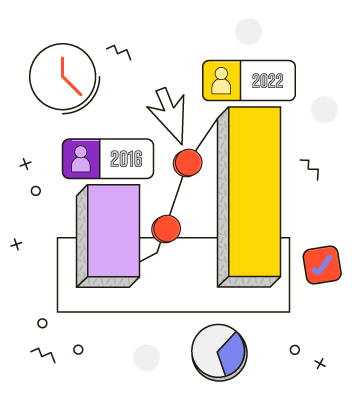
Membership length varies widely depending on the plan. Fully virtual members stay the longest, at around 14 months, followed by office subscribers at about 12 months. After that there's a drop of roughly four months down to dedicated desk plans, with hot desk and part time options clustering around seven to eight months.
These results show that private or fully virtual subscriptions build stronger, longer lasting relationships, while flexible desk and part time arrangements see quicker turnover. To improve overall retention, operators might want to consider tailored incentives or extra support for the shorter stay plans.
Evolution &user behaviour in the flexible workspace industry
Looking at overall membership length, the average time spent on a completed contract has climbed steadily over the past decade, rising from around six months in early 2016 to nearly thirteen months by 2026. There are occasional dips, most notably in late 2016 and late 2020, but the sharpest increase happens at the start of the pandemic, when average tenure jumps from about seven to eight months. After holding near eight months through 2021, the trend picks back up in 2022, hits a series high in early 2025, and peaks again in early 2026.
Broken down by plan type, Dedicated Desk memberships start below five months in 2016 and grow to about ten months by mid 2026. Hot Desk tenure roughly doubles over the same period, moving from around five to nine months. Office plans more than double, from six months to over twelve, while Part time memberships climb by about seventy percent to near ten months. Virtual plans consistently post the longest stays, rising from six months to around fifteen months by 2026.
Section 2
How does the user profile influence the permanence of members?
Membership choices and user profile play a central role in how long people stay in a coworking space. Over the course of a career, people in more flexible arrangements, like hot desks and part time seats, tend to extend their stays gradually, while private offices and fully virtual memberships build the longest commitments, especially once members move into their twenties and beyond. Across the board, tenure grows with experience, and virtual plans show the steepest rise in engagement over time.
Interestingly, whether someone joins alone or as part of a team barely affects overall stay length; both freelancers and company groups stick around for similar amounts of time. Instead, it's the type of plan that makes the biggest difference: private office and virtual options draw the most sustained engagement, dedicated desks and part time arrangements sit in the middle, and hot desk bookings typically see the shortest stays. The charts that follow break these patterns down in more detail.
Key findings
How does the age of members affect their tenure?
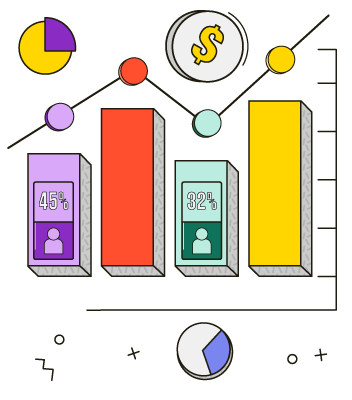
Dedicated Desk members start with a fairly short stay of about 5 months in the youngest group, extending to nearly 9 months by mid career. Hot Desk users show a smooth increase, from roughly 7 months at the start to around 11 months for those over fifty, a sign of steadily growing engagement. Office subscribers already average about 9 months even in the youngest bracket, then climb past the one year mark by mid career.
Part time members follow a smoother curve, rising from roughly 5 months in the youngest group to just under 10 months among the oldest. Virtual memberships reach the longest stays overall, climbing from about 7 months at the start to over 15 months for seniors, with the steepest gains happening as members move into their twenties and thirties.
How does tenure compare between freelancers and teams?
The first chart shows that freelancers and teams have almost identical lengths of stay in coworking spaces, averaging about eleven months each. Individual members stay only about a week longer than company groups, pointing to a similar level of commitment across both types since 2016.
Looking at different membership plans, tenure shifts more noticeably. In private offices, freelancers stay around thirteen months versus ten months for teams, while purely virtual plans show the highest engagement overall, about fourteen months for both groups. Dedicated desk and part time arrangements average around eight months of use, and hot desk bookings are the shortest at roughly seven months.
Section 3
Evolution & User Tenure by Coworking Size
Membership length in coworking spaces shifts noticeably as companies grow. Across all sizes, from small coworkings with under forty seats to large venues with over two hundred fifty, average stays tend to shorten as size increases. Remote members consistently show the strongest commitment, while those on flexible or part time passes turn over more quickly. This pattern shows how different membership options hold up as spaces grow and seating capacity expands.
Looking back over recent years, average tenure has climbed steadily across every size range, with the sharpest rise seen in the largest spaces. Member characteristics matter too: longer serving individuals and older members tend to stay on more consistently, and independent freelancers typically outlast small teams, a gap that widens as seat counts grow. These themes set up a closer look at how tenure plays out by membership type, company size, and user profile.
Key findings
Mean tenure by membership type
Average member tenure drops steadily as coworking companies grow larger. In the smallest operators (up to 40 members), virtual members stay the longest at around 17 months, followed by office members at about 14 months and dedicated desk users at roughly 11 months. Part time and hot desk members stay about 10 and 9 months respectively. As companies move into mid size tiers, all membership types lose roughly one to two months of average tenure.
In the largest operators (over 250 members), average stays drop further: virtual memberships fall to about 12 months and office to near 12 months as well, while dedicated desk averages dip to 7 months and hot desk and part time settle between 6 and 7 months. Across every size band, virtual members remain the most enduring, while hot desk and part time consistently have the shortest stays.
Evolution of tenure
In smaller coworking spaces with up to forty members, average membership length rose steadily from about eight months in early 2016 to over fourteen months by the end of 2022, reached sixteen months by the start of 2024, and briefly peaked at nineteen months in early 2026. In mid sized operators (forty one to one hundred members), tenure grew from just over seven months in January 2016 to around twelve months by mid 2020, jumped to sixteen months by the end of 2022, and hit twenty months in early 2026 before pulling back slightly.
Among spaces hosting one hundred to two hundred fifty members, tenure started at roughly five months in 2016, moved into the ten month range by 2019, climbed to thirteen months by late 2022, and neared nineteen months in early 2026. The largest operators (over two hundred fifty members) showed the most dramatic proportional growth, starting at three months in early 2016, leveling off around seven to eight months through 2021, then rising to eleven months by early 2026.
Mean tenure by age
In small coworking companies with up to forty seats, average membership length rises steadily with age, starting around seven months for the youngest group and reaching roughly fifteen months for those over fifty five. In operators with forty one to one hundred seats, tenure starts higher, at about eleven months, grows modestly through the middle age ranges, then picks up speed into the early teens for the oldest members.
In mid sized spaces of one hundred one to two hundred fifty seats, membership length increases at a fairly steady pace, climbing from about ten months for the youngest group to around twelve months for the oldest. Very large operators with more than two hundred fifty seats show a clear dip among the youngest members, just under seven months, followed by a sharp jump into double digits in the mid twenties and a steady climb to roughly thirteen months for those over fifty five.
Average length of stay by coworking size
In the smallest coworking companies, members stay the longest, with freelancers remaining for around fourteen months and teams about thirteen months. As space size grows to between forty and one hundred seats, average stays dip to roughly thirteen months for freelancers and twelve months for teams. In medium sized operators (one hundred to two hundred fifty seats), this decline continues, with freelancers around twelve months and teams close to eleven months.
The largest operators (over two hundred fifty seats) record the shortest tenures: freelancers stay about ten months and teams under ten months. Across all size categories, freelancers consistently outstay teams, and the gap becomes most pronounced in the biggest spaces. This suggests that as coworking companies grow, overall member loyalty tends to shorten, though independent workers remain somewhat more steadfast than small teams.