

Section 1
How does the type of plan affect the permanence of members?
Membership lengths vary noticeably by plan type, with fully remote options inspiring the longest stays and more structured seat-based or part-time plans leading to shorter commitments. This contrast highlights how location flexibility builds sustained engagement, while fixed-desk arrangements and occasional-use models tend to support briefer stays.
Over the past decade, average membership durations have climbed across every plan, with a notable jump at the onset of the pandemic and continued growth through 2025. Remote and virtual offerings have driven much of this rise, followed by private office plans, while hot-desk and part-time memberships have also shown steady gains in member loyalty.
Key findings
How does the type of plan affect the permanence of members?
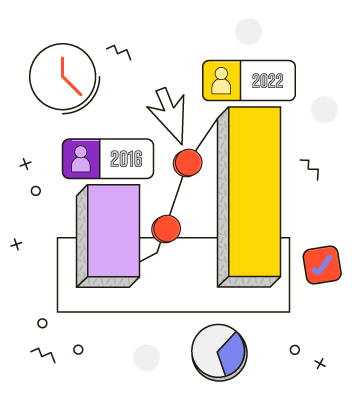
Members on fully remote plans remain the longest, averaging around 14 months. Private office members follow at about 12 months, while those on dedicated desks stay roughly 8 months.
Flexible offerings yield shorter tenures, with hot desk and part-time users both around 7 months. The data highlights that remote plans support far greater member longevity—nearly six months more than desk-based options—and that office memberships outperform fixed-desk arrangements by about four months.
Evolution &user behaviour in the flexible workspace industry
Across all flexible workspace plans, the typical length of membership has steadily climbed from around six months in early 2016 to roughly thirteen months by spring 2026. This rise shows regular year-end highs, an accelerated jump when the pandemic began, and continued growth through 2022–25, as members increasingly extend their commitments in response to evolving workspace needs.
When we break this down by plan type, office-plan members moved from about six months in 2017 to over twelve months by late 2025. Hot-desk and dedicated-desk plans both grew from roughly five months in 2016 to around nine or ten months by 2025. Virtual memberships saw the strongest rise, reaching about sixteen months by early 2026, while part-time plans climbed from near three months in 2016 to around eleven months by 2026.
Section 2
How does the user profile influence the permanence of members?
Members’ average duration steadily increases with age across every membership type. Entry-level options like part-time and hot desk access see modest growth in length of stay, while dedicated desks, private offices and virtual subscriptions record more pronounced increases among older cohorts.
Commitment levels are remarkably similar for independent users and teams—underscoring a shared tendency to stick around nearly as long regardless of group size. The one standout is private offices, where individual professionals typically hold on longer than organized teams.
Key findings
How does the age of members affect their tenure?
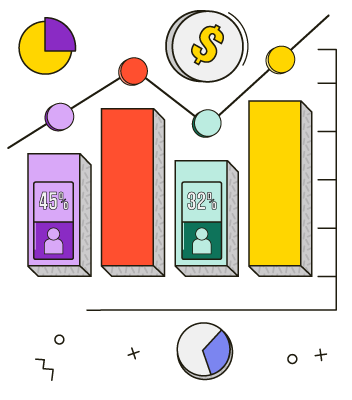
Dedicated Desk, Hot Desk and Part-time memberships all show a steady increase in average stay as members grow older. For Dedicated Desk holders, tenure rises from about 5 months for the youngest group to roughly 9 months by mid-life, dipping only slightly for the oldest members. Hot Desk users start near 7 months and extend to around 11 months among those aged 55 and up. Part-time plans follow a clean upward path from about 5 months at the youngest to close to 9 months at the oldest, remaining the shortest-term option overall.
Office and Virtual memberships deliver the longest commitments, especially in later years. Office users jump from about 8 months for ages 17–24 to around 12 months by the mid-30s, then level off near 13 months for the oldest group. Virtual memberships climb from roughly 7 months in the youngest cohort to about 14 months by mid-life and reach a peak of 16 months for those over 55.
How does tenure compare between freelancers and teams?
Across all coworking operators, freelancers tend to stay just a bit longer than teams—about eleven months versus around eleven months for groups. The gap amounts to only a few days, suggesting that independent users and teams show nearly the same overall commitment when using coworking spaces.
Looking at membership categories, tenure patterns remain close for most setups: teams on dedicated desks stay about nine months while freelancers average eight, and both groups use hot desks for around seven months. Virtual plans drive the longest stays, at roughly fourteen months each. The biggest difference appears in private offices, where freelancers rent for about thirteen months versus ten months for teams, and part-time access falls in between, at eight months for teams and seven for freelancers.
Section 3
Evolution & User Tenure by Coworking Size
Membership duration in coworking spaces varies noticeably with the number of seats available, showing longer commitments in smaller companies and shorter stays as capacity grows. Over the last several years, average tenures have trended upward, reaching their highest levels during and immediately after the pandemic before settling into a steadier pattern. This progression highlights how evolving market conditions and user preferences shape the length of time members stay on board.
Beyond space size, tenure also shifts with the characteristics of the users themselves. Older members consistently maintain longer bookings than younger cohorts, and individual freelancers tend to hold memberships for more extended periods than teams, particularly in larger settings. The following sections explore these dynamics across different company sizes, time periods, age groups, and user types in greater detail.
Key findings
Mean tenure by membership type
In companies with up to 40 members, virtual members stay the longest at about 17 months, followed by office at 14 and dedicated desks near 11, while part-time and hot desk options hover around 10. In firms managing 41 to 100 members, tenures ease slightly: virtual remains highest at roughly 15 months, office around 14, and flexible seats like hot desk and part-time fall to about 9.
Among mid-size operators with 101 to 250 members, virtual and office memberships average around 14 and 13 months, while part-time drops to about 7 and hot desk nears 8. In the largest coworking companies above 250 members, virtual and office tenures both slip to around 12 months, with all other membership types settling near 6 to 7.
Evolution of tenure
For the smallest coworking companies (up to 40 members), average membership length held around eight months in early 2016, rose to about eleven months at the start of the pandemic, and climbed to nearly fifteen months by late 2022 before peaking at close to nineteen months in early 2026. Mid-sized operators (41–100 members) followed a similar path, moving from roughly seven months in 2016 to around twelve months by mid-2020 and reaching about twenty months by March 2026.
Operators with 101–250 members saw average stays move up to roughly twelve months during the first pandemic wave and rise to nearly nineteen months by spring 2026. The largest operators (over 250 members) started with shorter stays but increased from about eight months in mid-2020 to around eleven months by early 2026.
Mean tenure by age
In smaller coworking companies, members’ average stay length rises steadily with age, starting at around 6 months for those aged 17–24 and nearly doubling to about 11 months by ages 25–34. Tenure continues to increase through midlife, reaching roughly 14 months for members aged 45–54 and peaking at about 15 months for those over 55. In mid-sized operators, the youngest cohort already averages around 11 months, with a more gradual climb to about 12 months by the 35–44 range and a peak of 14 months in the oldest group.
Larger coworking spaces follow a similar pattern but at slightly lower levels: 17–24 year-olds stay about 9 months on average, rising to nearly 11 months by 35–44 and topping out at 12 months after age 55. The very largest operators show the lowest starting point—around 7 months for twenty-somethings—but membership length grows to just under 13 months for the oldest cohort, narrowing the gap with other sizes in later life stages.
Average length of stay by coworking size
In coworking companies with up to 40 members, average stays peak at about 14 months for freelancers and 13 months for teams, making this the most tenured segment. As capacity grows to 41–100 members, these figures dip to roughly 13 months for freelancers and 12 months for teams, showing a slight decline in commitment once operators exceed forty seats.
In mid-sized coworking companies with 101–250 members, tenures drop further to around 12 months for freelancers and 11 months for teams. The steepest fall appears in the largest operators, where freelancers remain about 10 months and teams about 9 months. This widening gap suggests individual members hold on to memberships longer than company teams as operator size increases.